.png)
Report out on building decision support tools for nature credit project design
Conservation International, Nature Tech Collective and Earth Genome are sharing our experience and learning from building AI tools to help design nature credit projects. This project revealed that the main barrier to using AI for effective nature credit project design is knowledge infrastructure rather than just the technology itself.
The Executive Summary and Project Report detail the challenge practitioners face in the frenetically developing market for nature credits, our approach to designing and implementing tools with large language models for this conservation application, and our reflections on where the sector should head next.
Every day brings performance improvements in LLMs, and their software development capabilities are transformational. That is due to the gigantic resource of source code to train on, and the very clear methods to eval success.
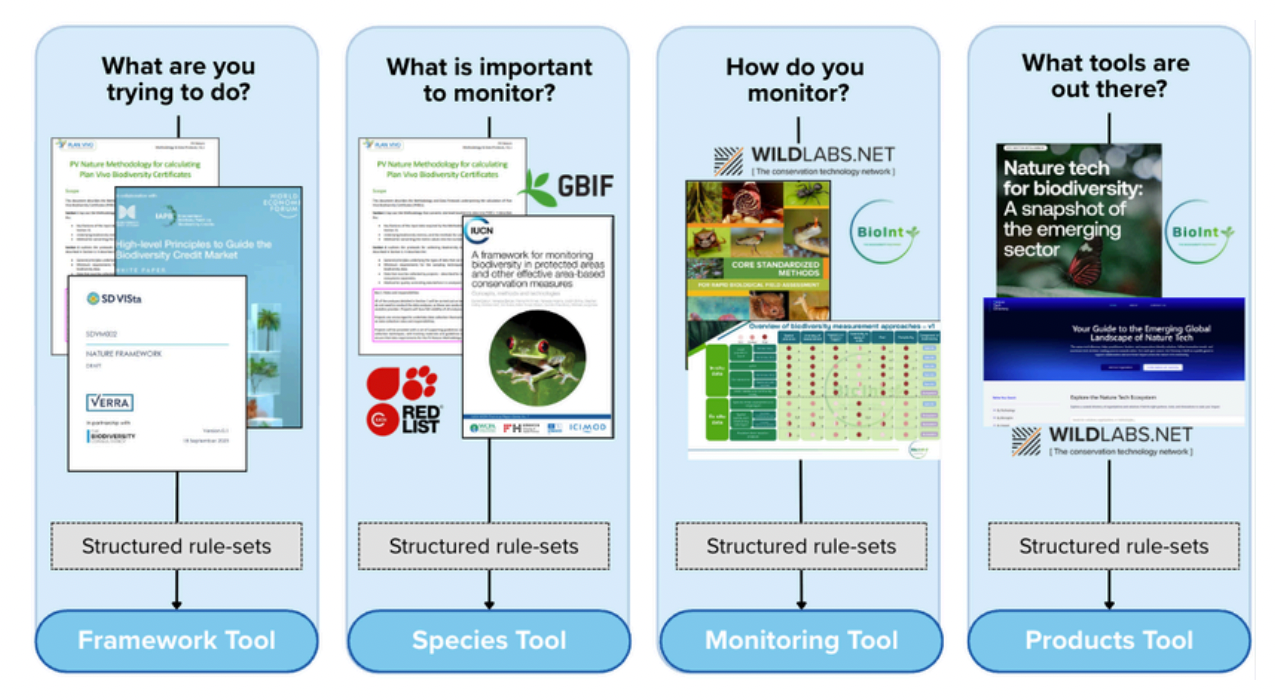
For nature credit projects, the written resources are comparatively miniscule. There's no equivalent of GitHub for verified nature credit methodologies. A great part of our work became fundamentally creating and organizing knowledge itself. What are the steps practitioners take to design a project, and what resources need to specifically be in context to take those steps? One of the key pleasures of this work was talking directly with the people working to answer these questions at the Biodiversity Footprint Intelligence Company, bloomlabs, and WILDLABS, as well as many generous folks at CI.
To support moving to more clear evals for AI tools, Dan McCarey developed “JSON Rule-Augmented Generation” (JRAG) to pre-process documents into structured, human-readable JSON “rulesets” that serve as explicit reference for agent reasoning, and are citable in structured ways, which enables transparent and auditable review by domain experts. We think this technique may have applicability in other knowledge domains as well. Details in the report, eager to hear reflections on it.

Again and again, we build AI powered conservation tools, and the results elevate and center something else more critical than the technology: knowledge and collaboration. This is super encouraging to me, and echoes the focus of best efforts I’ve witnessed since the dawn of the web over 30 years ago.
This project was very much a collective effort. From here, we see the greatest promise in the open community for AI for Earth. Continue to create and share knowledge openly, and develop collaborative resources that the whole community can lean on and build up. Consider this report out (Executive Summary and Project Report) a small contribution to that direction.
Appreciation to Patrick J. McGovern Foundation for supporting CI’s Nature Technology & Innovation AI Hub and this project.
Other articles
.png)
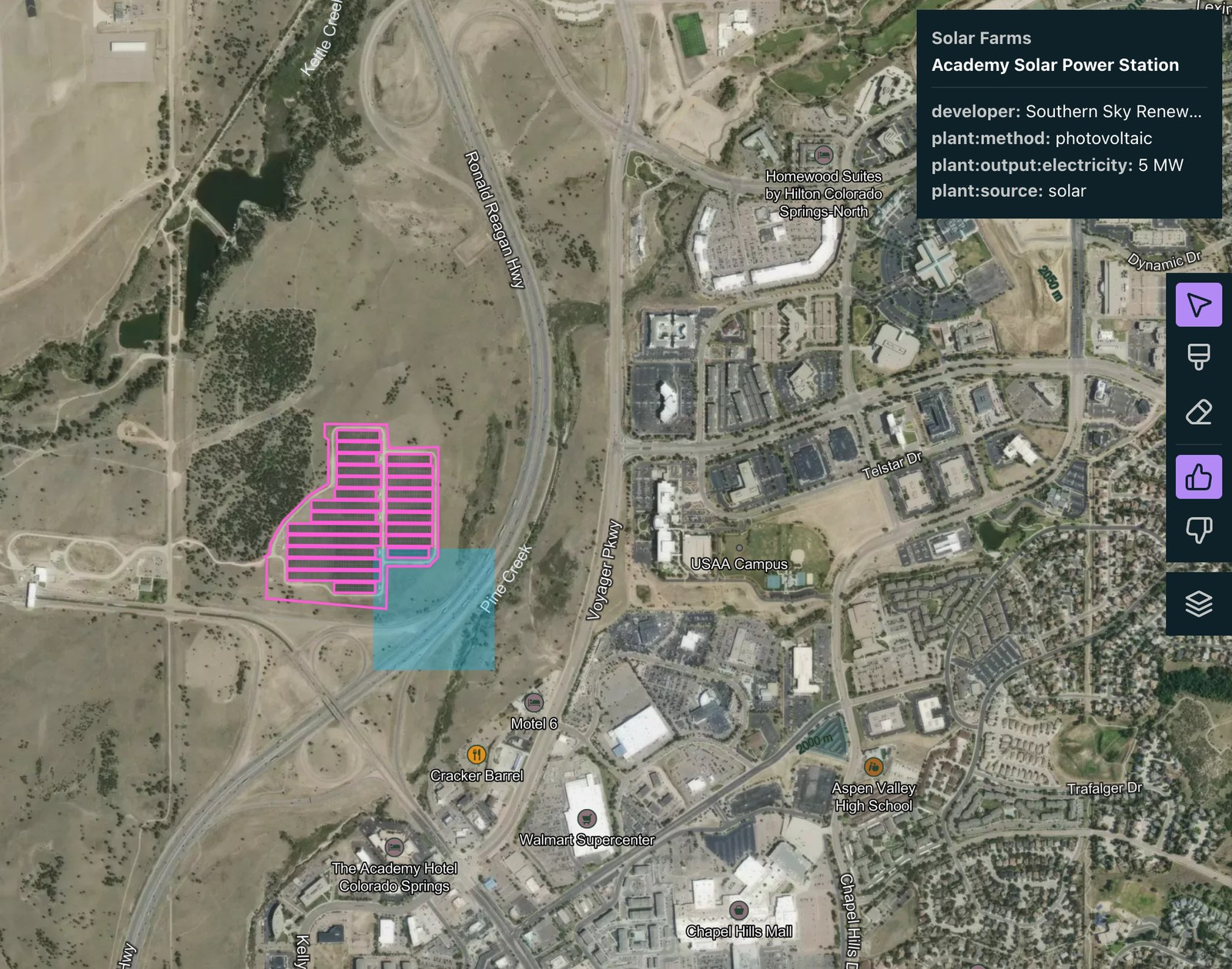
Search for Stuff: build a map layer by describing what you want to find
You can now create reference layers in Earth Index by describing what you want to find in plain language.

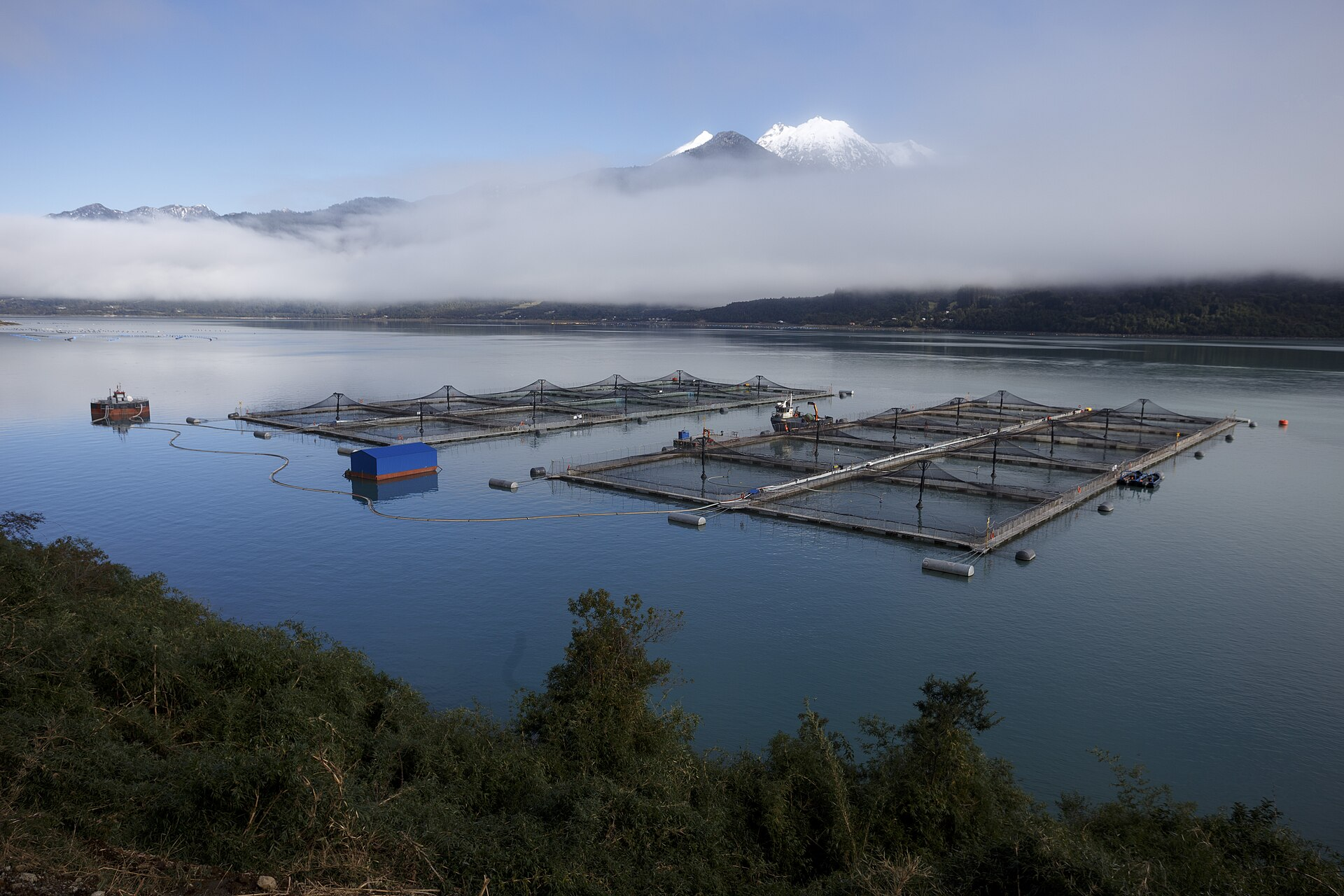
Using Earth Index as an independent validation tool for aquaculture regulations in Chile
Earth Index offers an independent satellite monitoring solution for global aquaculture, empowering regulators, researchers, and non-profits to ensure compliance and sustainable practices.


Two Foundation Models Are Better Than One
A Second-Stage Classifier on AlphaEarth Embeddings, and the Case for Domain-Specific FMs